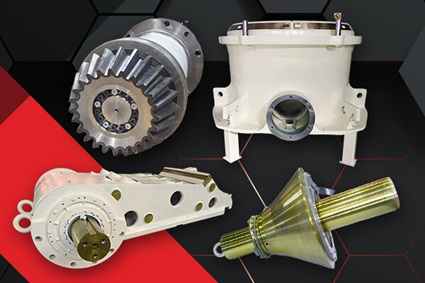


Even the highest-quality jaw crusher wear parts require regular inspection and maintenance to perform at their best.
Routine inspections help identify wear issues before they impact production, maintain product consistency, and reduce the risk of unexpected downtime. A structured wear management programme can also extend component life and improve overall crusher efficiency.
This checklist outlines the key areas operators should inspect to maximise the performance of their jaw crusher wear parts.
Why Regular Inspections Matter
Wear parts do not fail suddenly in most cases. Performance typically declines gradually as jaw plates, cheek plates, and supporting components wear over time.
Regular inspections help operators:
- Maintain throughput.
- Improve product consistency.
- Detect developing problems early.
- Extend component life.
- Reduce costly shutdowns.
Monitor Jaw Plate Wear Patterns
Jaw plates should wear evenly across the crushing surface.
Uneven wear, excessive rounding, or concentrated wear in specific areas often indicates feed or setup issues that should be addressed before they affect crusher performance.
During inspections:
- Measure wear at consistent locations.
- Compare readings against previous inspections.
- Monitor wear at the lower portion of the crushing chamber.
- Check for signs of uneven wear across the plate face.
- Rotate reversible jaw plates according to schedule.
Tracking wear measurements over time helps improve maintenance planning and replacement forecasting.
Inspect Cheek Plates and Toggle Components
Cheek plates and toggle assemblies often experience secondary wear that can be overlooked.
Regular inspections should include:
- Cheek plate wear.
- Signs of scoring or thinning.
- Toggle plate condition.
- Toggle seat wear.
- Pitman condition.
Many toggle plates are designed to function as a mechanical fuse, protecting more expensive crusher components if uncrushable material enters the chamber. However, signs of fatigue or abnormal wear elsewhere may indicate alignment or operational issues that require attention.
Verify the Closed-Side Setting (CSS)
The closed-side setting has a direct impact on product sizing and crusher performance.
Normal wear gradually changes the crushing chamber profile and can alter CSS over time. A routine inspection should include:
- Measuring CSS.
- Checking sizing consistency.
- Monitoring throughput changes.
- Confirming crusher settings remain within specification.
If oversized material begins to appear in the product stream, CSS should be checked before assuming component failure.
Check Fasteners and Retention Systems
Jaw crusher wear parts rely on properly functioning retention systems to remain secure during operation.
Inspect:
- Jaw die bolts.
- Wedges and retention hardware.
- Flywheel fasteners.
- Wear on wedge faces.
- Bolt hole condition.
Loose components can accelerate wear, affect crusher performance, and increase the risk of secondary damage.
Maintain Lubrication on Critical Components
Lubrication plays a key role in protecting crusher components and maintaining reliable performance.
Inspection routines should include:
- Verifying lubrication intervals.
- Checking grease condition.
- Monitoring operating temperatures.
- Cleaning contamination from lubrication points.
- Investigating unusual vibration or noise.
Heat build-up around bearings, toggle assemblies, or the pitman can often indicate lubrication-related issues.
Watch for Early Warning Signs
Many major maintenance issues can be avoided if warning signs are identified early.
Common indicators include:
- Uneven Wear
Uneven wear often points to feeding or operational issues that can accelerate wear rates and reduce crushing efficiency.
- Excessive Heat
Overheating can indicate lubrication problems, contamination, or component misalignment.
- Material Build-Up
Build-up within the crushing chamber can reduce crusher efficiency and place unnecessary load on wear components.
Addressing these issues early can help prevent more significant maintenance events.
Maximising Jaw Wear Part Performance
Inspection and maintenance are just as important as wear part selection.
A combination of quality wear parts, proper crusher setup, and regular inspections helps ensure reliable performance, predictable wear life, and efficient crushing operations.
WearKraft jaw crusher wear parts are designed to provide consistent performance and predictable wear characteristics across demanding quarrying, mining, and recycling applications. Combined with a proactive inspection programme, they can help operators maximise uptime and maintain crushing efficiency.
Frequently Asked Questions
How often should jaw crusher wear parts be inspected?
Jaw plates, cheek plates, and retention systems should be visually inspected regularly, with more detailed inspections completed as part of a scheduled maintenance programme.
What are the first signs that jaw plates need attention?
Common indicators include uneven wear patterns, reduced product consistency, increased vibration, unusual noise, and changes in crusher performance.
Does inspection frequency affect crusher performance?
Yes. Regular inspections help maintain throughput, improve product consistency, and identify developing issues before they lead to downtime or costly repairs.
What causes uneven jaw plate wear?
Uneven feed distribution, incorrect crusher settings, material characteristics, and loose components can all contribute to uneven wear patterns.